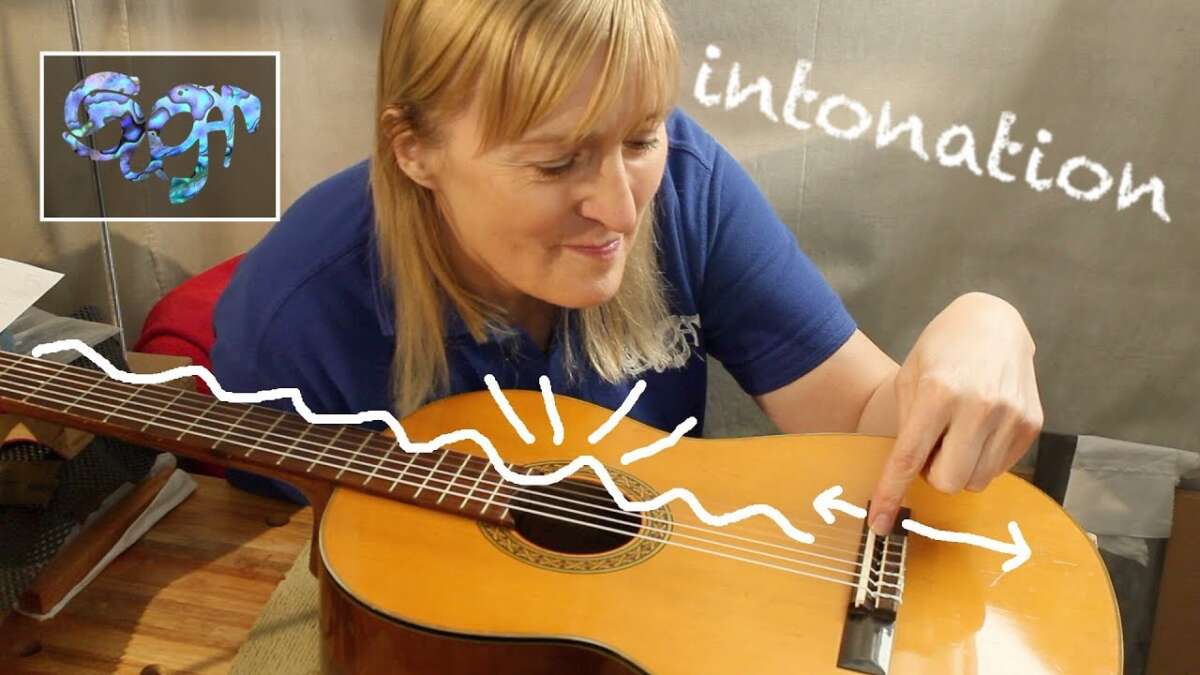
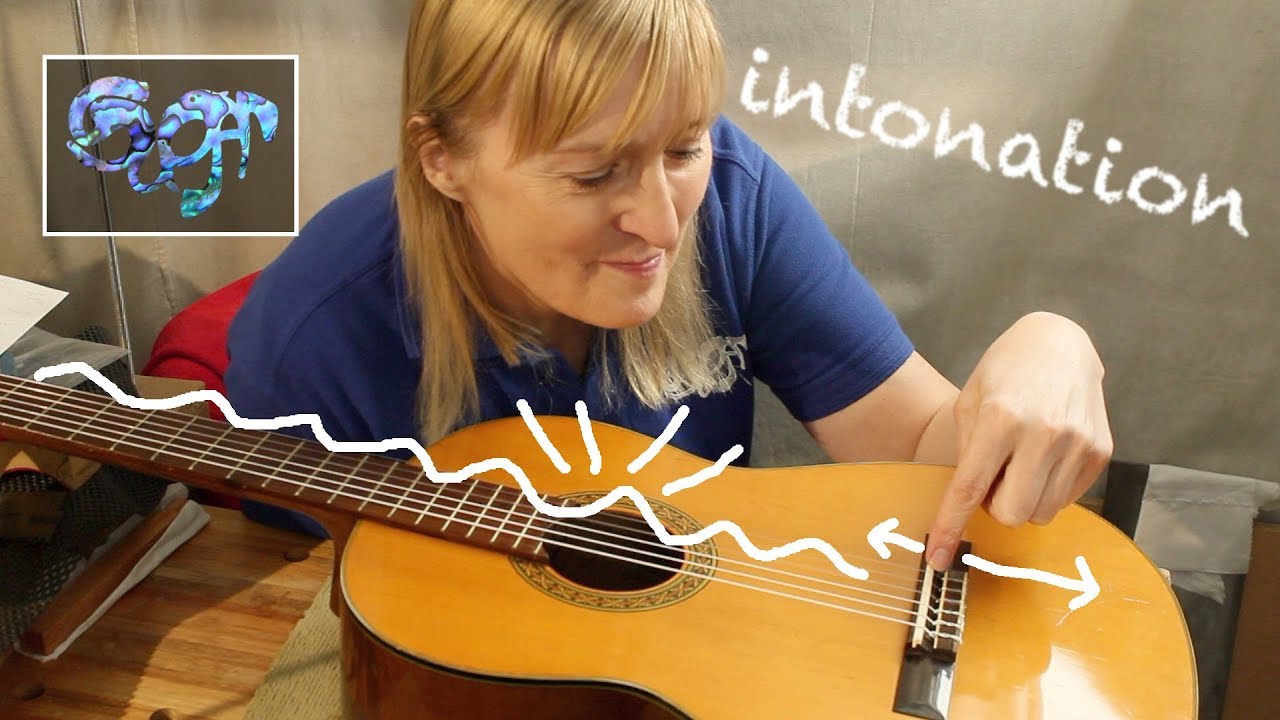
How To Fix Intonation On Acoustic Guitar: Easy Steps
Adjust saddle compensation, check scale, tune with harmonics, and correct action and nut.
I’m a guitarist and tech who has fixed dozens of acoustic guitars. In this guide I’ll walk you through how to fix intonation on acoustic guitar step by step. You’ll learn quick checks, the tools you need, common causes, safe adjustment techniques, and when to call a luthier. Read on and you’ll be able to diagnose and improve poor intonation with confidence.

Why intonation matters for your acoustic guitar
Good intonation means notes play in tune up and down the neck. When intonation is off, chords sound fine open but go sharp or flat as you move up the fretboard. Learning how to fix intonation on acoustic guitar improves recordings, live playing, and your ear training. Small fixes can make a big musical difference and help your guitar feel more inspiring to play.

Common causes of bad intonation
- High or low action can change string tension and pitch when fretted.
- Worn or miscut saddle or nut causes uneven string length and pressure.
- Wrong string gauge changes where notes sit relative to scale length.
- Neck relief (truss rod adjustment) that’s too much or too little can alter fret response.
- Frets that are worn or not level make the fretted note sit sharp or dead.
- Incorrect tuning method — using only open string tuning rather than harmonics causes errors.
When you understand these causes, you know what to check first when learning how to fix intonation on acoustic guitar.
Tools and supplies you’ll need
- Electronic tuner with strobe or high accuracy for cents reading.
- Capo to compare open string and fretted pitch consistently.
- Small files, sandpaper, or a saddle shaper for light saddle work.
- Feeler gauges or ruler for measuring action and nut height.
- Replacement saddle or compensated saddle if the current one cannot be adjusted.
- New set of strings, ideally the gauge you normally use.
Good tools make how to fix intonation on acoustic guitar faster and safer.

Step-by-step: how to fix intonation on acoustic guitar
- Check the basics
- Clean the guitar and fit fresh strings of your usual gauge. Old strings give false readings.
- Tune open strings to pitch using a quality tuner.
- Compare harmonic vs fretted 12th-fret note
- Play the 12th-fret harmonic and ensure it is in tune with the open string.
- Fret the string exactly at the 12th fret and compare the fretted note to the harmonic using the tuner.
- If the fretted note is sharp, the string is too short. If flat, the string is too long.
- Inspect saddle and nut
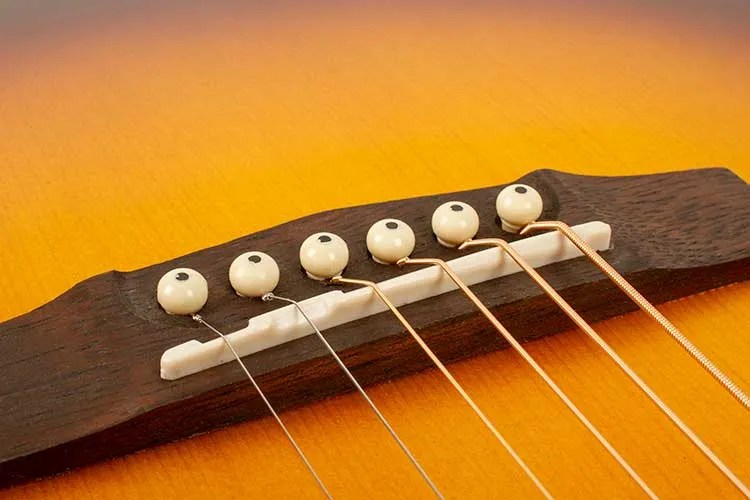
- Look for saddle angle, deep grooves, or uneven wear.
- A non-compensated saddle often needs minor reshaping or a compensated replacement.
- Adjust string length at the saddle
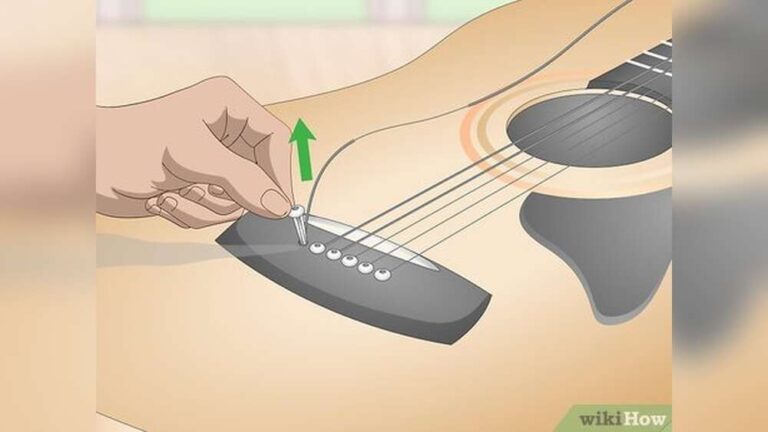
- For acoustics with removable saddles, sand or file the saddle to move string contact slightly.
- Shorten the string length by moving the contact point back to make fretted notes flatter, and vice versa.
- Check action and neck relief
- If action is high, lowering it can reduce sharp fretted notes under pressure.
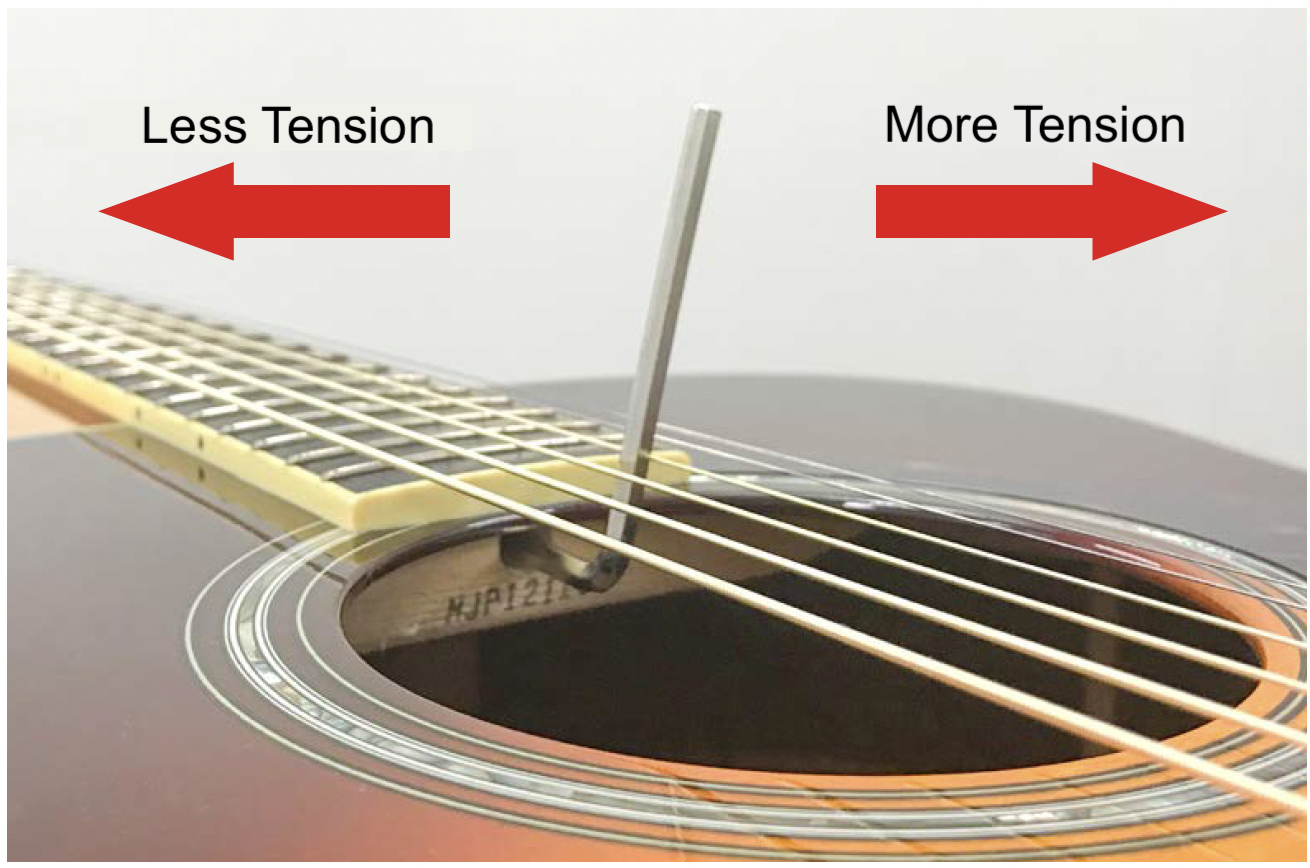
- Adjust truss rod in small turns only if you understand the result. Let the neck settle 24 hours before rechecking.
- Re-tune and re-check intonation
- After each change, stretch strings, tune, and compare harmonic vs fretted 12th fret again.
- Repeat until fretted and harmonic match within a few cents.
- When saddle reshaping is not enough
- Fit a compensated saddle or have one cut specifically for string spacing and compensation.
- A professional saddle blank will often correct stubborn intonation issues.
This ordered approach shows how to fix intonation on acoustic guitar without needless trial and error.
Advanced adjustments and saddle shaping
If basic checks don’t fix the problem, more advanced work may be needed. Compensated saddles have slightly varied contact points for each string to match scale length and string stiffness. Shaving a saddle at the string slot moves the speaking length and is done in small passes. For major changes, measure, mark, and test frequently; removing too much material is permanent. If you lack confidence, a luthier can make a precise compensated saddle and ensure proper slot geometry. These steps are part of a professional method for how to fix intonation on acoustic guitar when simple fixes fail.
Quick checks and fine-tuning tips
- Always use the string gauge you plan to keep. Changing gauge changes intonation.
- Tune with harmonics first, then adjust fretted notes to match.
- Use a capo at the first fret when checking a neck with high nut slots to keep consistency.
- Check every string — compensation needs vary across the set.
- If frets are worn, consider dressing or refretting; no amount of saddle work will fully fix bad frets.
These small habits speed up how to fix intonation on acoustic guitar and cut down repeat work.

When to take your guitar to a luthier
If you’ve tried the steps and problems persist, get a pro involved. Signs you need a luthier:
- Major fret wear or buzzing across many frets.
- A cracked bridge plate or loose bridge that affects string anchor points.
- Neck warp or severe relief that doesn’t respond to truss rod tweaks.
A luthier can measure scale length, cut a custom compensated saddle, and handle fretwork safely. Knowing when to refer the job is part of responsible care and part of learning how to fix intonation on acoustic guitar well.

Personal experience, mistakes to avoid, and practical tips
I once tried to fix intonation by aggressively lowering the saddle. I removed too much and had to replace the saddle. Lesson learned: take tiny steps and test after each change. Another tip: always let new strings settle for 24 hours and retune before final checks. When I install compensated saddles, I measure the offset per string and test with a strobe tuner for best results. These real-world tips help you avoid common traps while learning how to fix intonation on acoustic guitar.

Frequently Asked Questions of how to fix intonation on acoustic guitar
How do I tell if my acoustic guitar has bad intonation?
Play an open string harmonic at the 12th fret and compare it to the fretted 12th-fret note. If the fretted note is sharply or flat compared to the harmonic, your intonation needs attention.
Can I fix intonation by just tuning more carefully?
Careful tuning helps but does not fix physical causes like saddle shape, nut height, or fret wear. You need to adjust string length or parts to correct true intonation problems.
Does string gauge affect intonation?
Yes. Heavier strings increase tension and can shift the speaking length needed for accurate intonation. Always test intonation using the string gauge you plan to use.
Is truss rod adjustment part of fixing intonation?
Truss rod tweaks affect neck relief and playability, which can influence intonation. Only adjust the truss rod in small increments and re-tune before checking intonation again.
When should I replace the saddle to fix intonation?
Replace or install a compensated saddle when minor sanding won’t bring fretted notes in line with harmonics. A custom saddle often solves persistent or uneven intonation problems.
Can I fix intonation myself or should I see a luthier?
You can handle most basic intonation fixes like checking harmonics, action, and simple saddle work. See a luthier when fretwork, bridge issues, or custom saddles are needed.
Conclusion
Fixing intonation on acoustic guitar is a mix of careful diagnosis, minor adjustments, and sometimes professional help. Start with clean strings, harmonics, and a tuner, then work through saddle, nut, action, and neck relief in small steps. If a fix feels risky or permanent, a luthier will save time and money in the long run. Try the steps here, be patient, and your guitar will reward you with truer chords and a more reliable feel. If this guide helped, try the checks on your own guitar, subscribe for more tips, or leave a comment about your intonation challenge.

Senior Music Reviewer
Alex Carter is a seasoned music reviewer with over a decade of experience in the world of sound and instruments. Passionate about helping musicians and enthusiasts make informed choices, he brings sharp insights and in-depth knowledge to every review. From classical instruments to modern gear, Alex combines technical expertise with a love for music to deliver content that resonates with readers.
As a Senior Music Reviewer and expert author on Tuneluma.com, Alex is dedicated to sharing honest evaluations, practical advice, and thoughtful commentary to guide readers in their musical journey.