When We Were Young Guitar Chords: Easy Chords & Strumming
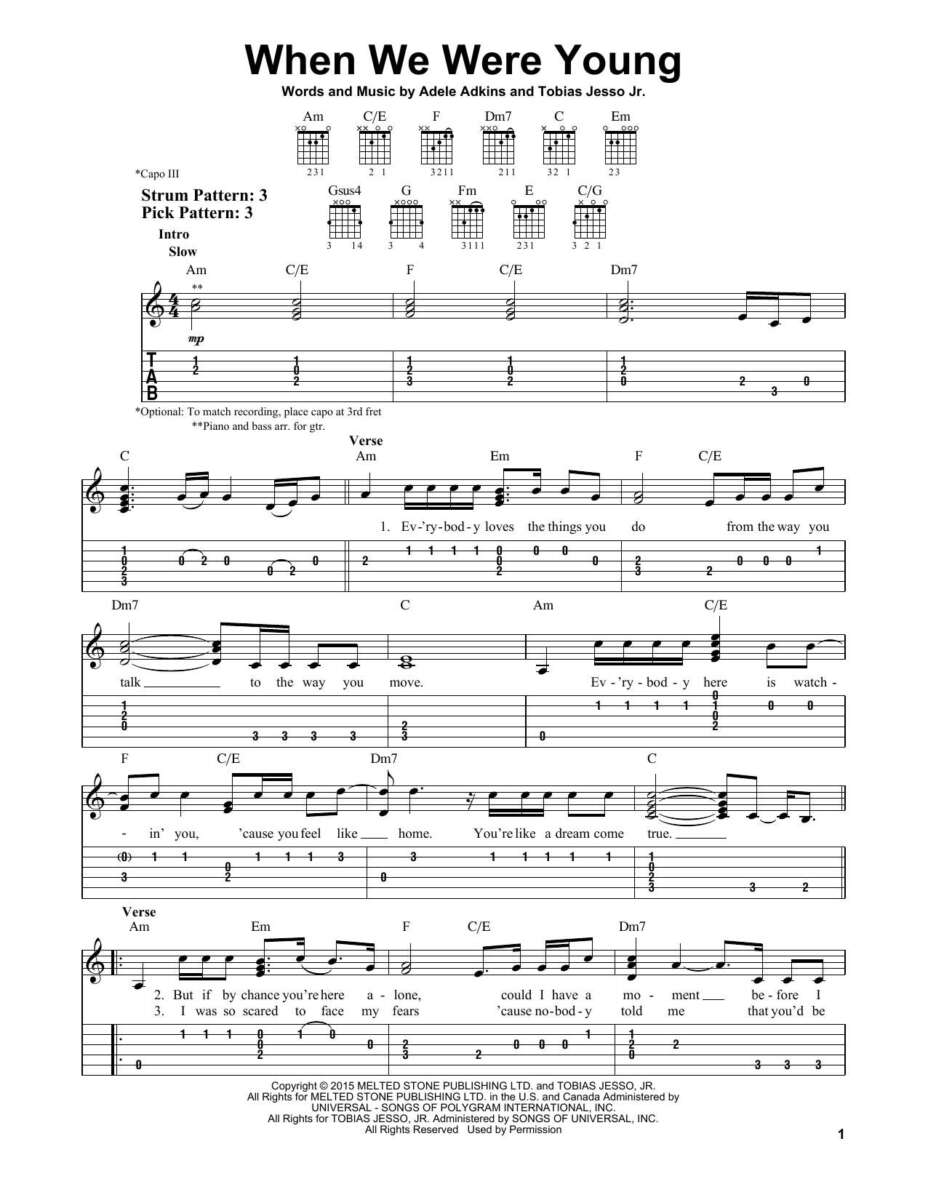
When We Were Young guitar chords use simple open shapes and a capo for easy singing.
I’ve taught and arranged this song for students and stages, and I’ll walk you through the exact when we were young guitar chords, how they fit the song, simple shapes to play, strumming and fingerstyle ideas, and a clear practice plan. You’ll get clear chord diagrams, capo guidance, rhythm tips, and real-world tricks I use to help players sound like the record or put their own spin on the tune. Read on and you’ll be able to play when we were young guitar chords with confidence and musicality.

Why the chord progression matters
The emotional pull of when we were young guitar chords comes from simple chords played with space and vocal focus. The song uses common major and minor triads that support the melody without cluttering it. Understanding the harmony makes it easy to add little fills and suspensions that lift the chorus.

Common chord shapes and fingerings
Most popular arrangements of when we were young guitar chords use familiar open shapes. Here are easy shapes you can start with. Hold each chord cleanly and strum once to check every note rings.
- G — 320003 (index 2nd fret A, middle 3rd fret low E, ring 3rd fret B)
- Em — 022000 (index 2nd fret A, middle 2nd fret D)
- C — x32010 (ring 3rd fret A, middle 2nd fret D, index 1st fret B)
- D — xx0232 (index 2nd fret G, middle 2nd fret high E, ring 3rd fret B)
- Am — x02210 (index 1st fret B, middle 2nd fret D, ring 2nd fret G)
These shapes cover most when we were young guitar chords versions. If you want fuller tone, try barre or 7th versions later.

Capo, key, and transposition
Singers have different ranges, so many players use a capo to match the original vocal pitch. A capo lets you use the same when we were young guitar chords shapes while shifting the key.
- To raise the pitch, move the capo up one fret at a time.
- If the original recording feels too high, drop the capo down or play open chords without a capo.
- Use a tuner or sing along to find the comfortable spot and then place the capo.
I often start students with a capo because it keeps chord shapes familiar while letting them sing freely.

Strumming patterns and rhythm
Rhythm and space are central to playing when we were young guitar chords well. Keep the strumming relaxed and let the vocal breathe.
Try this basic strumming pattern:
- Count: 1 2 & 3 4 &
- Pattern: Down, muted down, up, down, up
This gives a gentle groove that suits the verses.
For the chorus, add stronger downstrums on beats 1 and 3 to raise energy. Play slowly first and speed up once transitions are smooth.
 voicings, and small fills”
style=”max-width: 100%; height: auto; border: 2px solid black; border-radius: 10px; display: block; margin: 0 auto;”
loading=”lazy”
/>
Transition tips, voicings, and small fills
Smooth changes make the chord progression feel natural. Use these tricks when playing when we were young guitar chords.
- Move single fingers between chords to keep common tones.
- Use sus2 or sus4 voicings for softer shifts.
- Add a hammer-on or bass note walk between chord changes for interest.
From experience, focusing on the bass movement first helps students lock the progression in. Small fills on the higher strings can mimic piano lines and add emotion.

Beginner-friendly simplified versions
If you’re just starting, simplify the when we were young guitar chords to fewer strings or two-chord vamps. This keeps the song playable while you build skill.
- Two-chord loop: Em to C — good for verses while singing.
- Partial G: xx0003 — play just top strings to reduce reach.
- Power chords: 355xxx for G5 and x577xx for C5 — work if barre is hard.
These shortcuts let you play the song on day one and improve from there.

Practice plan to learn the song
A focused plan helps you master when we were young guitar chords quickly. Follow this simple schedule over two weeks.
Week 1
- Learn chord shapes and mute-check each chord for 10 minutes daily.
- Practice slow chord changes for 15 minutes with a metronome.
- Play through verse with basic strum for 10 minutes.
Week 2
- Add chorus dynamics and capo experimentation for 15 minutes.
- Work on strumming patterns and fills for 20 minutes.
- Do a full run-through with singing at tempo every other day.
Short, consistent practice beats long, unfocused sessions. Track progress and lower tempo when mistakes happen.

Fingerstyle and embellishments
Fingerpicking can make when we were young guitar chords sound intimate. A simple pattern works well: thumb on bass, then index, middle, ring on higher strings in a rolling pattern.
- Pattern idea: Thumb (bass) – index – middle – index.
- Use arpeggios during the bridge to create space.
- Add harmonics or gentle slides on the chorus exit to add shine.
I often teach students to pick the first bar and strum the second; that mix gives dynamics and keeps the arrangement interesting.
Frequently Asked Questions of when we were young guitar chords
What chords are used in when we were young guitar chords?
Most covers use simple major and minor chords like G, Em, C, D, and Am. The exact set can vary by key and capo placement.
Do I need a capo to play when we were young guitar chords?
You do not need a capo, but many players use one to match the singer’s range or to get the same tonal color as recorded versions. Try different capo positions to find what fits your voice.
Can beginners play when we were young guitar chords?
Yes. Start with simplified shapes like Em and C, and use easy strumming. Gradually add more chord shapes and rhythm complexity.
How do I sing and play when we were young guitar chords at the same time?
Practice slowly. First play chord changes without singing. Then sing over repeated simple chord loops. Build up speed as your muscle memory improves.
Should I fingerpick or strum when playing when we were young guitar chords?
Both work. Strumming supports a strong vocal performance. Fingerpicking adds intimacy. Choose based on mood and your comfort level.
Conclusion
When we were young guitar chords are accessible, musical, and flexible. Start with the simple shapes, find the right capo, and practice the rhythm slowly. Use the practice plan and tips here to build confidence and make the song your own. Try one run-through today, leave a comment about your progress, or subscribe to get more song breakdowns and chord guides.

Senior Music Reviewer
Alex Carter is a seasoned music reviewer with over a decade of experience in the world of sound and instruments. Passionate about helping musicians and enthusiasts make informed choices, he brings sharp insights and in-depth knowledge to every review. From classical instruments to modern gear, Alex combines technical expertise with a love for music to deliver content that resonates with readers.
As a Senior Music Reviewer and expert author on Tuneluma.com, Alex is dedicated to sharing honest evaluations, practical advice, and thoughtful commentary to guide readers in their musical journey.