How To Play Imperial March On Piano: Easy Step-By-Step
Play the main motif in G minor, pair it with strong left-hand chords, and add bold dynamics.
I have taught piano and arranged film themes for years, so I know how to play imperial march on piano for beginners and guests alike. This guide breaks the song into clear steps, shows the exact notes and chords, and gives practice tips that work in real lessons. Read on to learn how to play imperial march on piano with confidence, musicality, and fast progress.

Why the Imperial March works on piano
The Imperial March is simple and bold. Its melody is short and dramatic. That makes it perfect for piano players who want a theme with impact. Learning how to play imperial march on piano teaches phrasing, rhythm, and harmonic minor usage. You will get stronger left-hand support and better control of dynamics by practicing this piece.
Basic melody for beginners
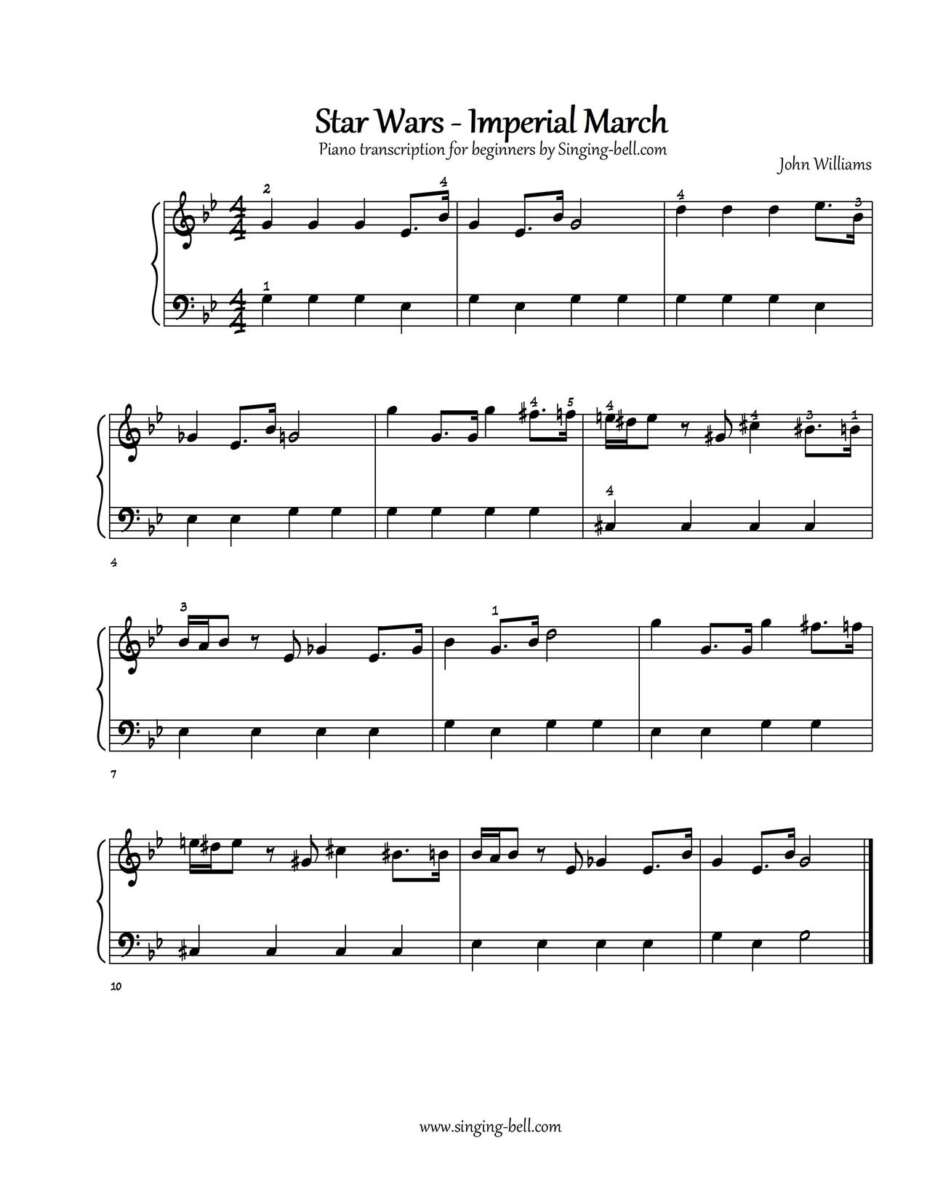
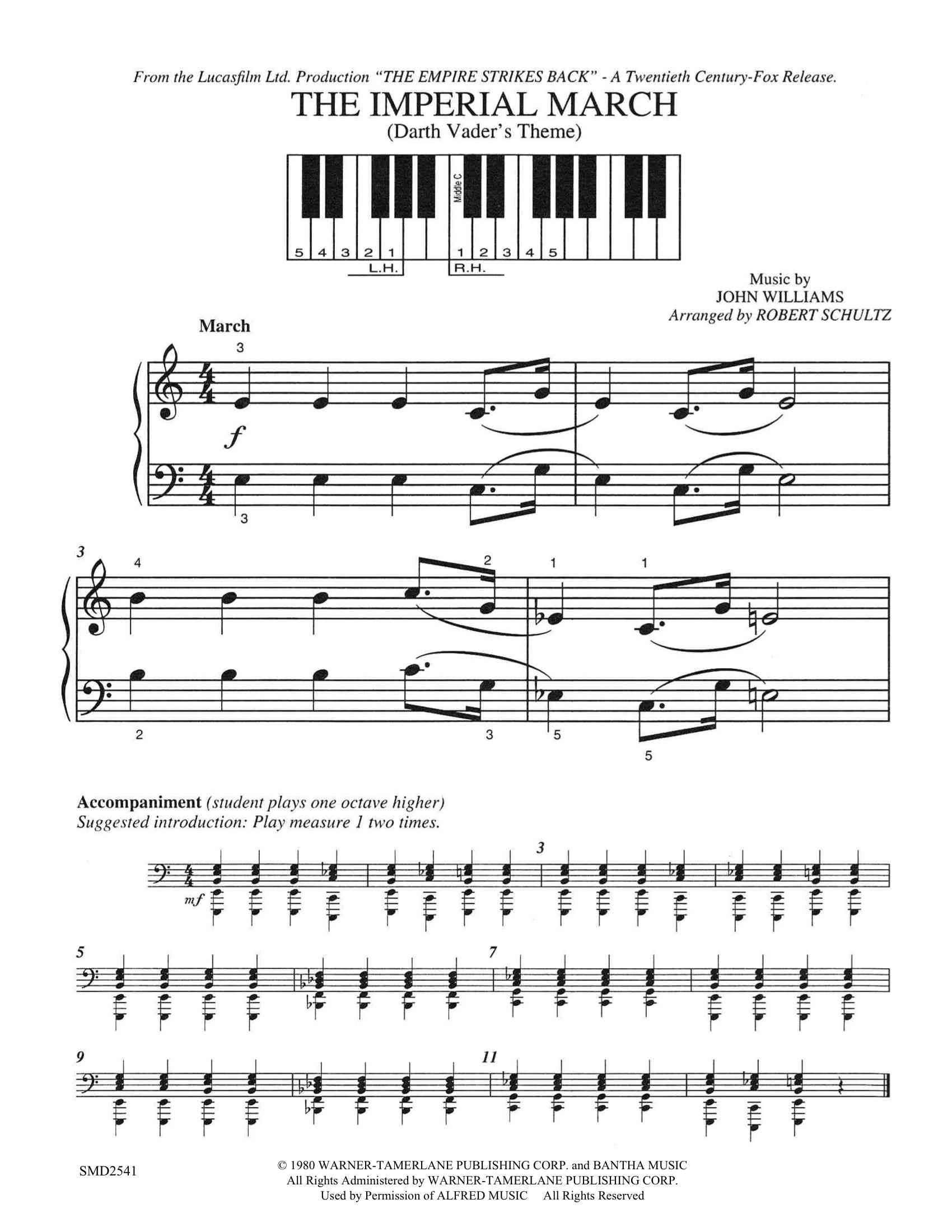
Start with the right hand melody in G minor. Play slowly at first. Here is a simple note line in letter notation. Use middle G as your reference.
- Measure 1: G G G Eb C G
- Measure 2: D D D C Bb G
- Measure 3: G G G Eb C G
- Measure 4: D D D C Bb G
Practice this melody until you can play it evenly. Keep fingers relaxed and use the same finger for repeated notes when comfortable. This sequence shows the core riff of how to play imperial march on piano.
Left-hand accompaniment and chords
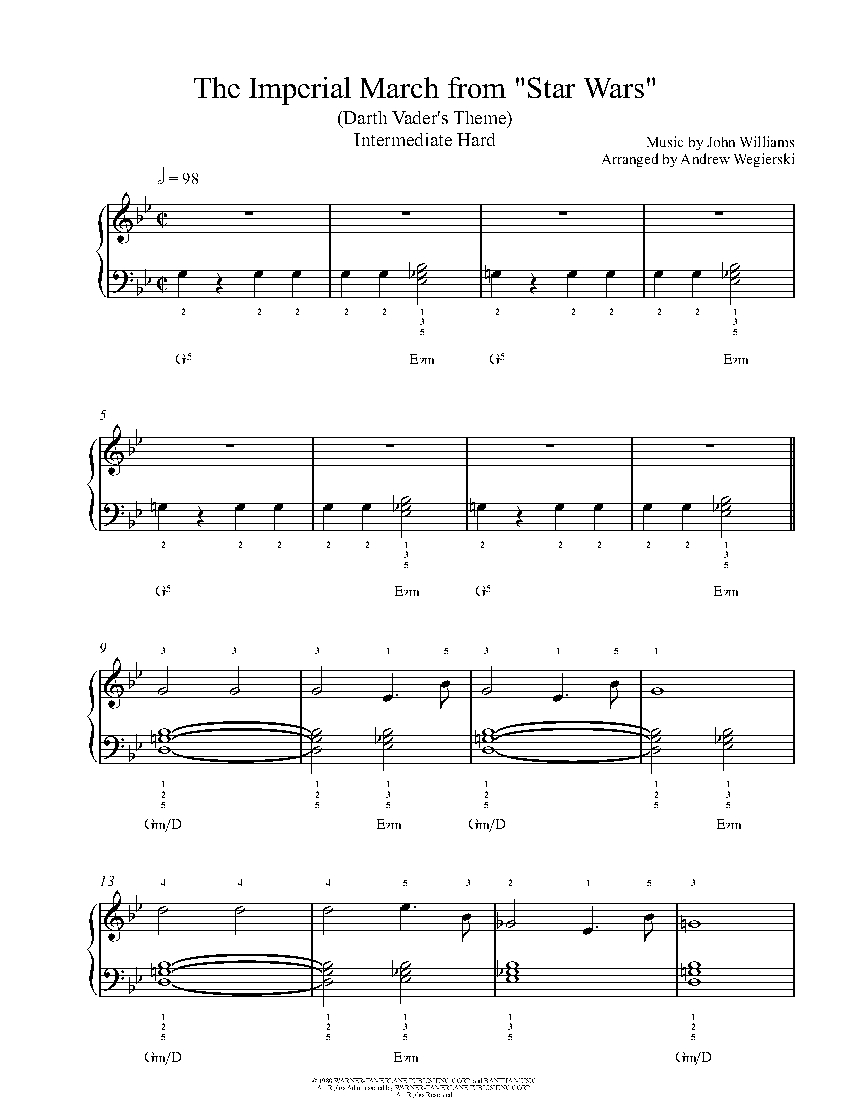
Left hand gives the march its weight. Use low root notes and simple block chords. Here are useful chords in G minor that match the melody.
- G minor: G Bb D
- Eb major: Eb G Bb
- C minor: C Eb G
- D major (V): D F# A
Use D major with F# to create a strong leading tone. That is a common trick in minor-key marches. Play the bass note on the beat and add a chord on beats one and three. This method creates the driving pulse that defines how to play imperial march on piano.

Fingerings and placement tips
Good fingering makes the march smooth. Keep hands near the fallboard. Use these practical fingerings for the main riff.
- Right hand: 1 1 1 2 3 1 for G G G Eb C G (thumb on G)
- Left hand: 5 on low G, then 1 on D for power moves
- For chords: play root with pinky and chord with thumb, index, middle as needed
Avoid stretching too far. Move the wrist slightly when shifting. These small habits speed your learning of how to play imperial march on piano.
 together — step-by-step practice plan”
style=”max-width: 100%; height: auto; border: 2px solid black; border-radius: 10px; display: block; margin: 0 auto;”
loading=”lazy”
/>
Putting hands together — step-by-step practice plan
Combine hands slowly. Break the tune into short phrases. Use this plan each day.
- Play right hand alone for 5 minutes. Focus on even spacing.
- Play left hand alone for 5 minutes. Keep steady pulse.
- Play both hands together, two measures at a time. Stop on mistakes.
- Use a metronome and drop tempo when stuck. Increase tempo by 5 BPM when steady.
Repeat each step until it feels natural. This stepwise practice is a proven path to learn how to play imperial march on piano well.
Adding expression, dynamics, and tempo
Dynamics turn notes into drama. The Imperial March lives on contrast. Use these tips.
- Start loud on the first phrase. Then drop slightly on the short response.
- Emphasize the first beat of each measure. That creates a march feel.
- Use small crescendos into big chords. It builds tension.
- Keep tempo steady. Typical tempo is between 80 and 100 BPM for a strong march.
Experiment with room tone and pedal. Light use of sustain can glue chords. Be careful not to blur the rhythm while you add color. These touches refine how to play imperial march on piano musically.
Common mistakes and troubleshooting
New players make similar errors. Here is how to fix them fast.
- Rushing the piece: Slow down. Practice with a metronome.
- Weak left hand: Isolate left-hand parts and build strength.
- Blurry chords with too much pedal: Use less pedal and lift on chord changes.
- Ignoring the harmonic minor: Use D major (with F#) to make the phrase resolve.
If you get stuck, record yourself. Listening back reveals small timing or balance issues you can fix. These fixes help you master how to play imperial march on piano faster.
Practice plan and exercises
Consistency beats long sessions. Try this weekly plan for steady gains.
- Daily 10-minute warm-up: scales in G minor and arpeggios.
- 15 minutes on melody: slow, hands separate, then together.
- 10 minutes on left hand: chord patterns and bass octaves.
- 5 minutes on dynamics: play soft then loud passages.
Use these short blocks every day. Focused practice helps you keep motivation and improves how to play imperial march on piano quickly.
Personal tips from my experience
I learned this march for a recital and played it for many audiences. Small changes made the biggest difference. Here are lessons I learned.
- Learn the melody so it feels like a chant. That makes memorizing easy.
- Watch the harmony. Using the raised D (F#) gives the phrase punch.
- Keep the left hand steady. A solid bass gives the tune weight and drama.
- Play for others early. Feedback speeds progress and builds confidence.
These are real tips from teaching and performing. They help you make the leap from notes to performance when you learn how to play imperial march on piano.
Frequently Asked Questions of how to play imperial march on piano
What key is the Imperial March usually played in on piano?
The piece is often in G minor for piano arrangements. That key keeps the melody strong and easy to reach for most players.
Can beginners learn how to play imperial march on piano quickly?
Yes. The main motif is short and repetitive. With focused practice, beginners can play a simple version in a few days.
Should I use the sustain pedal for this piece?
Use pedal sparingly. Light pedal on chords can add depth, but too much will blur the rhythm and ruin the march feel.
Do I need to learn harmonic minor for this song?
Learning harmonic minor helps. The D major chord with F# is key to a strong resolution in G minor.
How fast should I play the Imperial March on piano?
A steady tempo of 80 to 100 BPM works well. Start slower and increase speed by small steps when the parts are clean.
Is it better to play a simplified version or the full score?
Start with a simplified version to build confidence, then add harmony and riffs. This approach speeds learning and avoids frustration.
Conclusion
You can learn how to play imperial march on piano with clear steps and short, focused practice. Start slow, isolate hands, use the harmonic minor trick, and shape the dynamics. With steady practice and attention to rhythm, you will move from a simple riff to a bold performance. Try the daily plan, record one practice, and share it for feedback. Subscribe for more film-theme guides or leave a comment with your progress.

Senior Music Reviewer
Alex Carter is a seasoned music reviewer with over a decade of experience in the world of sound and instruments. Passionate about helping musicians and enthusiasts make informed choices, he brings sharp insights and in-depth knowledge to every review. From classical instruments to modern gear, Alex combines technical expertise with a love for music to deliver content that resonates with readers.
As a Senior Music Reviewer and expert author on Tuneluma.com, Alex is dedicated to sharing honest evaluations, practical advice, and thoughtful commentary to guide readers in their musical journey.