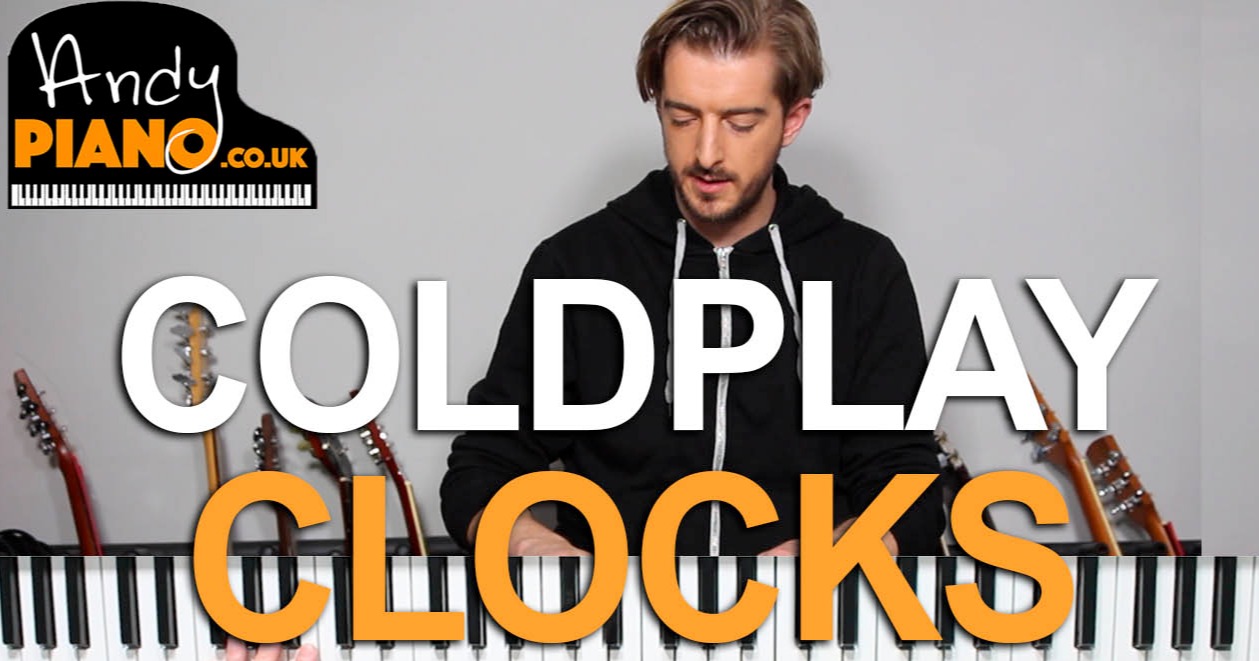
How To Play Clocks By Coldplay On The Piano: Easy Guide
Play the repeating arpeggio, simple chord loop, and clear melody to learn Clocks fast.
I’ve taught and played Clocks by Coldplay dozens of times. I’ll break down how to play Clocks by Coldplay on the piano in clear, simple steps. You’ll learn the core chord loop, the right‑hand arpeggio, left‑hand patterns, tempo, pedal work, and performance tips. I’ll share my mistakes and practice plan so you can play confidently and musically.
Understanding the song and its structure
Clocks is driven by a repeating piano loop. The loop creates the song’s hypnotic pulse. To master how to play clocks by coldplay on the piano, you must learn the main four‑chord progression and the signature arpeggio. The studio arrangement is layered, but the piano part sits front and center.
Key points to know before you start:
- The common piano version uses the chord loop Eb — Bb — Fm — Cm. Play these as simple triads first.
- The riff repeats through most of the song. Once you lock the pattern, many parts fall into place.
- The original tempo is near 130 BPM. Practice slower and build up speed.

Essential chords and voicings you need
Start with the basic chords for how to play clocks by coldplay on the piano. Work from simple triads to slightly richer voicings.
Basic voicings:
- Eb major: play Eb (left), Eb-G-Bb (right). Use a 1-2-4 fingering in the right hand for smooth arpeggios.
- Bb major: play Bb (left), Bb-D-F (right). Keep the same finger shapes to move quickly.
- F minor: play F (left), F-Ab-C (right).
- C minor: play C (left), C-Eb-G (right).
Voicing tips:
- Use first inversion for smoother movement when possible. For example, play Eb/G (G in bass) to connect to Bb smoothly.
- Add the 7th or 9th sparingly for color. The song’s magic is in the repetition, not heavy reharmonization.
- Keep top‑note clarity. The melody sits on top of the arpeggio.

Right hand: the signature arpeggio and melody
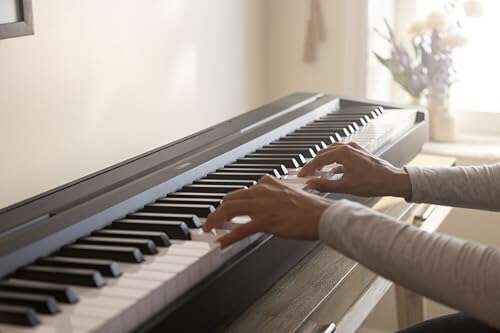
The right hand plays the recognizable arpeggio pattern. Learning this is central to how to play clocks by coldplay on the piano.
How to play the arpeggio:
- Break each chord into a 3‑note pattern. For Eb major, play G-Bb-Eb as an upward arpeggio and return.
- Repeat a steady rhythm across each chord bar. Count with a metronome: 1 & 2 & 3 & 4 &.
- Keep the top note slightly louder to bring out the melody.
Practice steps:
- Hands separate first. Master the right hand arpeggio slowly.
- Use consistent fingerings, like 1-2-4 for three-note shapes, to avoid swapping mid-phrase.
- Gradually increase speed from 60 BPM to about 130 BPM over multiple sessions.
Left hand: patterns, bass motion, and groove
The left hand provides the harmonic foundation. It must be solid and steady for how to play clocks by coldplay on the piano on the piano.
Left-hand options:
- Simple root note: play the root on beats 1 and 3. This is ideal for beginners.
- Octave bass: play the root plus the octave for a fuller sound. Use fingers 5 and 1 or 5 and 2.
- Broken fifths: alternate root and fifth for movement and less muddiness.
Groove tips:
- Keep the left hand steady and even. The right hand is rhythmic; let the left anchor the pulse.
- Avoid heavy left-hand pedaling that masks the arpeggio clarity.
- Lock with a metronome to prevent rushing on transitions.

Putting both hands together: step-by-step
Combine hands slowly to understand how the parts fit. This is the core practice for learning how to play clocks by coldplay on the piano.
Step-by-step plan:
- Play the left-hand root pattern at 60 BPM for four bars.
- Add the right-hand arpeggio at half speed while the left keeps steady.
- Play one chord loop hands together slowly. Focus on clean transitions.
- Repeat until comfortable, then increase tempo by 5 BPM increments.
- Once steady, practice the full four-bar loop in sets of 5 minutes.
Practical note:
- If hands clash, simplify the right hand by playing only two notes until coordination improves.
- Record yourself. Listening back reveals timing issues you might not feel.
Pedal, dynamics, and tone
Pedal and touch shape how to play clocks by coldplay on the piano on the piano expressively. Small adjustments make a big difference.
Pedal guidance:
- Use the damper pedal lightly to link arpeggios across chord changes.
- Change pedal cleanly on chord shifts to avoid blurring.
- Try half‑pedaling to keep clarity while sustaining the sound.
Dynamics and touch:
- Keep the arpeggio even and relaxed. Accent the top note for melody lift.
- Build crescendos into the chorus or final repeats for impact.
- Don’t over‑sustain; the song breathes when the piano is clear.
Common mistakes and how to avoid them
Knowing common pitfalls will speed up learning how to play clocks by coldplay on the piano.
Mistakes and fixes:
- Rushing: use a metronome and slow practice to prevent speed creep.
- Over-pedaling: clear the pedal at each chord change to keep arpeggios crisp.
- Poor fingerings: choose fingering that minimizes hand shifts and stick to it.
- Ignoring dynamics: keep the melody audible by accenting the top note.
Personal note:
- I used to speed the bridge. Recording and slowing the track helped me fix that habit.
Arranging, subtle variations, and performance tips
Once you can play the core loop, add small variations to make the piece your own. This helps when playing covers live.
Ideas to expand the arrangement:
- Add simple bass fills between phrases for interest.
- Drop the right-hand arpeggio for a bar to create tension.
- Use a light countermelody in the left hand during repeat sections.
- For solo performances, play fuller left-hand voicings in the final chorus.
Performance tips:
- Start slow and settle tempo before building to the recorded speed.
- Use repetition to your advantage. The loop is hypnotic — subtle shifts keep listeners engaged.
- Practice transitions to the bridge and ending so they feel natural.
Practice plan and timeline
A clear practice plan helps you learn how to play clocks by coldplay on the piano efficiently.
Two-week sample plan:
- Week 1, Days 1–3: Hands separate, 20 minutes each session. Focus on arpeggio and left-hand roots.
- Week 1, Days 4–7: Hands together slow. Metronome practice increasing 5 BPM every two days.
- Week 2: Add dynamics and pedal. Practice full run-throughs and record twice weekly.
- Ongoing: Perform the piece for friends or record a short video to simulate live pressure.
Small, consistent sessions beat long, infrequent ones. Aim for 15–30 minutes daily.
Resources, sheet music, and next steps
Use reliable resources to refine how to play clocks by coldplay on the piano. Good materials speed progress.
Suggested resources:
- Official sheet music for accurate voicings and structure.
- Slow-down apps to practice at reduced tempo.
- Play-along tracks with metronome or a backing band.
- Short tutorial videos that isolate hand parts.
Next steps:
- Learn a simple solo or improvisation over the chord loop.
- Try a duet version with a drummer or bassist for live feel.
- Transpose the piece if the original key is hard on your hands.
Frequently Asked Questions of how to play clocks by coldplay on the piano
What is the main chord progression for Clocks?
The common piano loop is Eb — Bb — Fm — Cm. This four-chord progression repeats and forms the backbone of the song.
How fast should I practice Clocks on piano?
Start around 60 BPM for accuracy. Gradually increase to the original tempo near 130 BPM once hands move cleanly together.
Do I need to read sheet music to learn Clocks?
No. You can learn by ear or using chord charts and tabs. Sheet music helps with exact voicings and notation if you want accuracy.
How should I use the sustain pedal for Clocks?
Use light, precise pedal changes on chord shifts to avoid blurring. Half-pedaling can help sustain without losing clarity.
What fingering works best for the arpeggio riff?
Use consistent fingerings like 1-2-4 for three-note arpeggios in the right hand. Stick to the same fingering to avoid awkward repositioning.
Can beginners play Clocks easily?
Yes. Beginners can play a simplified version with root notes in the left hand and single-note arpeggios in the right. Build complexity over time.
Conclusion
You can learn how to play clocks by coldplay on the piano by focusing on the core chord loop, a steady left hand, and the repeating right‑hand arpeggio. Practice slowly, use a metronome, and work hands separately before combining them. My advice: start small, record your progress, and add tastefully simple variations as you gain confidence. Try a focused two‑week plan and share your first clean recording; you’ll be surprised how quickly it comes together. Leave a comment with your biggest challenge and I’ll help you troubleshoot it.

Senior Music Reviewer
Alex Carter is a seasoned music reviewer with over a decade of experience in the world of sound and instruments. Passionate about helping musicians and enthusiasts make informed choices, he brings sharp insights and in-depth knowledge to every review. From classical instruments to modern gear, Alex combines technical expertise with a love for music to deliver content that resonates with readers.
As a Senior Music Reviewer and expert author on Tuneluma.com, Alex is dedicated to sharing honest evaluations, practical advice, and thoughtful commentary to guide readers in their musical journey.