Best Guitar Strings For Drop C: Top Picks For 2026
Top pick: Stringjoy Drop Tune 12-64—best balance of tension, clarity, and sustain for Drop C.
You want a tight low end with clear mids when you tune to Drop C. I’ve spent years swapping strings on stage and in the studio to find sets that keep low tunings chunky, stay in tune, and refuse to sound muddy. This guide cuts through the noise and shows the best guitar strings for Drop C, so you can get consistent tone, tuning stability, and playability without endless trial and error.
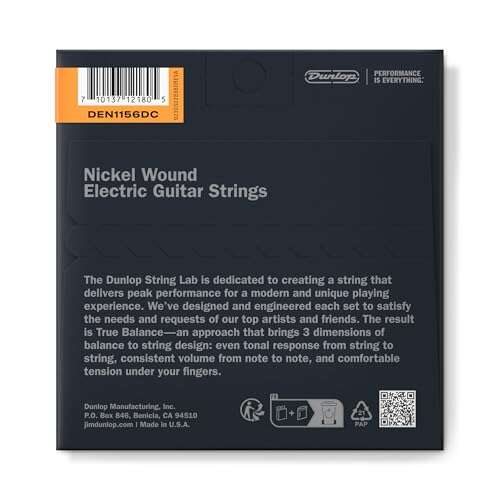
Nickel Wound 11-56 (Drop C)

I used this 11-56 nickel-wound set to get a balanced feel when I switch between standard and Drop C. The top strings feel familiar and flexible for leads, while the heavier wound bass strings keep the low C controlled. I found them easy to bend and friendly for hybrid picking and palm muting. Tension is moderate, so the neck doesn’t fight you when tuning down.
On a Les Paul-style guitar, these strings delivered clear midrange and a defined low end. They work well with distortion and clean amps alike. For players who want a relatively lightweight feel with added bottom-end support, this set is a solid compromise. I recommend them for casual gigging and home recording when Drop C is a common tuning.
Pros:
- Balanced tension across top and bottom strings
- Clear midrange that cuts through mixes
- Good expressiveness for bends and vibrato
- Stable tuning for occasional Drop C use
- Affordable and easy to find
Cons:
- May feel loose on longer scale guitars at Drop C
- Not optimized for constant heavy palm-muting
My Recommendation
This set is best for players who toggle between standard and Drop C and want a familiar feel without switching guitars. I recommend it to session players and bedroom producers who need flexibility. It’s a practical choice if you use Drop C regularly but still play standard tunings often.
| Best for | Why |
|---|---|
| Players who switch tunings | Balanced tension works in both standard and Drop C |
| Recording at home | Clear mids and low-end translate well to mixes |
| Budget-conscious buyers | Reliable tone at a lower cost |
Ernie Ball Bass Beefy 63-130

When I need the thickest low end for Drop C on extended-range or baritone guitars, bass strings like these 63-130 beefy rounds work surprisingly well on the low string conversion. They bring massive mass to the low string and keep the C note tight and punchy. On a long scale instrument, they eliminate flabby low-end wobble and provide a focused attack. Expect increased break-in time and a shift in feel compared to standard guitar sets.
I used them on a 27″ scale conversion and found the low frequency definition remarkable. The treble strings need matching to a regular guitar set, but the combined result was a monster low end suitable for heavy riffing. These are a specialty option for players who want the best guitar strings for Drop C when clarity and tension matter most. They are not a drop-in for every guitar but excel on longer scale lengths.
Pros:
- Massive low-end clarity for Drop C
- Great for heavy palm-muted riffs
- Stable pitch even under aggressive picking
- Durable winding that resists breakage
- Good for barged or extended-range guitars
Cons:
- Requires mixed set or custom pairing for upper strings
- Can feel stiff on shorter scale guitars
My Recommendation
Use these if you want the firmest low C and play heavy music that needs tight attack. I recommend them for baritone builds, extended-range guitars, and players who convert their low string to a bass gauge. They’re among the best guitar strings for Drop C when you need maximum low-end control and power.
| Best for | Why |
|---|---|
| Baritone/long-scale players | Massive string mass maintains low C clarity |
| Heavy riffers | Tighter low-end for heavy palm-muted tones |
| Custom string builds | Use with lighter top strings for balance |
Ernie Ball Beefy Slinky 11-54

I prefer the Beefy Slinky 11-54 when I want brighter harmonics on top and more backbone on the low strings. These sets feel familiar to players who normally use lighter gauges but want a thicker bottom end for Drop C. The wound G and low strings add midrange punch that helps rhythm parts cut through. They are a good midweight option for many guitarists.
On a medium scale guitar, I found them responsive for solos and tight for chugs. String life is solid, and they sound great through both single-coil and humbucker pickups. If you want dependable performance for Drop C without going to super-heavy gauges, this set is a sensible choice. It’s one of the more versatile sets for gigging players.
Pros:
- Balanced feel with reinforced low strings
- Good harmonic clarity for leads
- Works well with various pickup types
- Durable and reliable for gigs
- Comfortable bendability on top strings
Cons:
- May still be thin for players who want extreme low-end
- Not specialized for baritone scales
My Recommendation
I recommend these to players who want a midweight feel with confidence at Drop C. I use them when I need a blend of lead playability and enough bottom for heavy rhythm. They are one of the best guitar strings for Drop C if you want a single, versatile set for live and studio work.
| Best for | Why |
|---|---|
| Gigging guitarists | Versatile tone for stage and studio |
| Players who solo and riff | Comfortable top strings, beefy low end |
| Mixed-genre musicians | Good tonal balance for many styles |
Stringjoy Drop Tune 11-58 (DRP11)

I like Stringjoy’s DRP11 set for Drop C because it’s built specifically for drop tunings, with a medium top and beefy bottom. The result is a responsive high end and a focused low C that doesn’t sag. I noticed better intonation and less fret buzz compared to lighter sets when I used these on my PRS-style guitar. They’re made with tight manufacturing tolerances, so strings come out consistent every time.
Stringjoy nails the balance between playability and tension. The 11-58 set is forgiving for leads and tight for heavy chording. If you play with drop tunings often, these are engineered to be among the best guitar strings for Drop C. They also pair well with low action setups for fast rhythm work.
Pros:
- Engineered for drop tunings
- Consistent manufacturing and tension
- Clear highs with strong low-end definition
- Good intonation across the fretboard
- Ideal for hybrid picking and heavy riffing
Cons:
- Top-heavy players may prefer thicker highs
- More expensive than generic sets
My Recommendation
These are for guitarists who use Drop C often and want a purpose-built set. I recommend Stringjoy Drop Tune 11-58 if you want one set that handles both solos and heavy rhythm cleanly. They rank high on my list of best guitar strings for Drop C because they are made with drop tuning in mind.
| Best for | Why |
|---|---|
| Frequent drop-tuners | Designed specifically for drop tunings |
| Studio players | Consistent tension and intonation |
| Technical rhythm players | Tight low end with responsive highs |
D’Addario NYXL 11-52

NYXL strings are my go-to when I need strength and stability at lower tunings. The NYXL 11-52 set has higher break-resistance and tighter core construction. In Drop C, they give excellent tuning stability, especially if you like aggressive playing or use a tremolo system. The strings feel snappy and maintain tone longer than many standard sets.
I use NYXL 11-52 on touring guitars because they hold up under frequent use. They deliver a punchy attack and clear harmonic content in Drop C. If you want reliability and durability as part of the best guitar strings for Drop C, these are a top choice. They’re slightly brighter than pure nickel options, which helps in dense mixes.
Pros:
- Excellent tuning stability in low tunings
- High break-resistance
- Snappy feel and bright attack
- Long-lasting tone
- Great for heavy-handed playing
Cons:
- Brighter tone may not suit vintage-voiced players
- Slightly pricier than entry-level sets
My Recommendation
I suggest NYXL 11-52 for gigging players who demand durability and tuning stability in Drop C. I trust them on guitars that see heavy use and tight stage conditions. For players chasing the best guitar strings for Drop C with long life and solid attack, NYXLs are a smart pick.
| Best for | Why |
|---|---|
| Touring musicians | High durability and tuning stability |
| Aggressive players | Resists breakage under hard playing |
| Bright-toned rigs | Good harmonic clarity in mixes |
Ernie Ball Mammoth 12-62
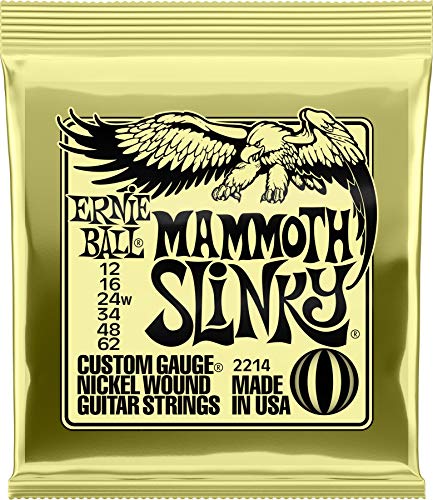
Ernie Ball Mammoth Slinky sets give me extreme low-end tension without sacrificing playability. The 12-62 gauges are a favorite for Drop C if I want thick, clear low strings but still want to solo comfortably. They have a muscled low end and smooth feel on the wound strings. On thicker sets the upper strings still play well and maintain intonation.
I used Mammoth 12-62 when tracking a heavy record and the low C was clean and clearly defined. These strings avoid the flabbiness that lighter sets can have in low tunings. If you want one of the best guitar strings for Drop C that leans heavy, the Mammoth set is a proven solution. Expect greater tension and a slightly firmer touch.
Pros:
- Very solid low-end definition in Drop C
- Good string-to-string balance
- Comfortable for lead work despite heavy bottom
- Durable and long-lasting tone
- Well-suited for heavy distortion
Cons:
- Heavier tension can be tiring over long sets
- Not ideal for players who prefer very light gauges
My Recommendation
Choose Mammoth 12-62 if you want the thickest, most focused low C without losing playability. I use them for heavy studio work and when I need aggressive low-end presence. For those hunting the best guitar strings for Drop C that deliver maximum punch, these are an excellent choice.
| Best for | Why |
|---|---|
| Recording heavy tones | Thick low end with defined attack |
| Players wanting max tension | Very stable low string tension |
| Distortion-heavy styles | Resists muddiness under gain |
Stringjoy Drop Tune Heavy 12-64 (DRP12)

I consider Stringjoy’s 12-64 one of the most refined heavy Drop C sets available. The tuned construction keeps low strings tight and harmonically clear while preserving playability on the top strings. When I need authoritative tone and minimal buzz, these strings do the job. Their precision manufacturing yields excellent intonation and consistent feel.
On guitars with stable neck setups, I experienced reliable sustain and clarity. The 12-64 is my pick when I need a no-compromise heavy set for Drop C. These rank among the best guitar strings for Drop C for players who demand studio-quality feel and a powerful low end. They’re exceptional for heavy riffing and modern metal styles.
Pros:
- Very tight low-end response
- Excellent intonation and sustain
- Refined manufacturing consistency
- Great for modern metal and hard rock
- Balanced top-string playability
Cons:
- Requires setup or truss adjustment on some guitars
- Not ideal if you prefer very light bending tension
My Recommendation
I recommend Stringjoy Drop Tune 12-64 for players who treat Drop C as a primary tuning and need rock-solid tone. I use them in the studio when tracking low, tight riff patterns. For anyone searching for the best guitar strings for Drop C to get professional-grade low-end, these are top-tier.
| Best for | Why |
|---|---|
| Pro studio players | Superior intonation and sustain |
| Modern metal guitarists | Tight low end with cutting attack |
| Players seeking consistency | High manufacturing standards |
D’Addario EXL110 10-46
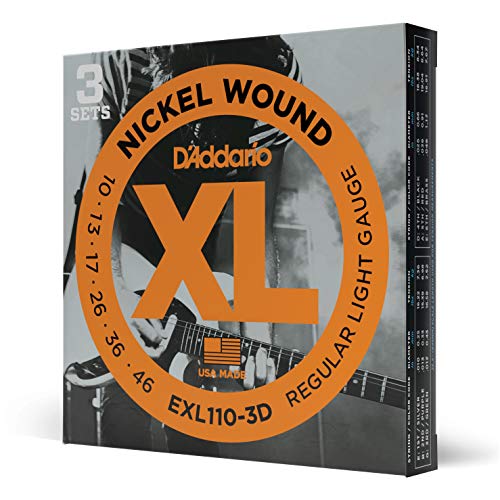
EXL110 10-46 is a classic, but in Drop C it requires stronger low strings or a different setup. I often pair the EXL110 top strings with heavier bottom wound strings to get the best guitar strings for Drop C while keeping flexible upper strings for leads. Alone, 10-46 can feel too loose on low C, but combined they create a playable and bright set. The EXL110 tops provide excellent note clarity and fast attack for solos.
When I mix EXL110 treble strings with heavier gauge bass strings, I get a hybrid set that offers nimble lead response and solid low-end power. It’s a DIY solution that saves money and tailors feel. I recommend this approach if you want a balanced hybrid set and prefer lighter treble action for speed.
Pros:
- Fast-feeling top strings ideal for solos
- Bright attack and clear articulation
- Economical and widely available
- Great for hybrid custom sets
- Works well with heavier bottom strings
Cons:
- Not sufficient alone for Drop C bottom string
- Requires mixing gauges for best results
My Recommendation
Use EXL110 10-46 as part of a hybrid set if you want fast top strings while tuning to Drop C. I pair them with heavier lower strings to achieve a sweet spot between speed and tension. This combination can be one of the best guitar strings for Drop C if you prefer light lead feel and a firm low C.
| Best for | Why |
|---|---|
| Lead-focused players | Fast upper strings for soloing |
| DIY string builders | Easily paired with heavier bottom gauges |
| Budget-minded musicians | Affordable and versatile |
Jim Dunlop Heavy Core 10-48

Jim Dunlop Heavy Core sets are designed for players who want core stiffness and defined attack. In Drop C, the extra core stiffness helps reduce flab on the low string. I found these strings responsive and direct when recording rhythm parts. The feel is slightly stiffer than standard sets but gives excellent note definition under distortion.
They work great when you want a controlled low end without moving to very heavy gauges. I often use them on guitars that handle medium scale length. For players seeking one of the best guitar strings for Drop C that combines core strength and playable top strings, these are worthy of consideration.
Pros:
- Firm core for reduced low-end wobble
- Direct, defined attack
- Good under high-gain settings
- Comfortable upper-string playability
- Affordable and consistent
Cons:
- Stiffer feel may not suit all players
- Limited range of gauge options
My Recommendation
Pick Jim Dunlop Heavy Core 10-48 when you want extra core stiffness to tame low C. I recommend them for players who prefer a firm feel without using very heavy gauges. They perform well as a candidate for best guitar strings for Drop C when you seek control and clear attack.
| Best for | Why |
|---|---|
| Players wanting core stiffness | Reduces low-end wobble at Drop C |
| High-gain setups | Defined attack through distortion |
| Budget players | Affordable option with solid feel |
Jim Root Signature 12-64

Jim Root’s 12-64 signature set is built for lower tunings and aggressive playing. While marketed for Drop A, it performs excellently in Drop C as well, especially on guitars with flatter radius and active pickups. The set gives me a dense low end and focused midrange that works well with heavy gain. Upper strings remain playable enough for solos and pinch harmonics.
I used this set when tracking dark, low riffs that needed authority. They respond well to palm muting and produce a chunky, consistent tone. If you want a player-tested heavy signature set that handles Drop C without flab, these strings are a great option. They sit among the best guitar strings for Drop C for players who love a thick, modern tone.
Pros:
- Signature tone tailored for low tunings
- Thick, focused low-end response
- Great under high-gain rigs
- Balanced upper string playability
- Durable and stage-ready
Cons:
- Heavier feel may reduce finger agility
- May require setup changes on some guitars
My Recommendation
Choose Jim Root 12-64 if you need a signature heavy set for Drop C with proven stage performance. I use these for intense palm-muted riffs and metal rhythm work. They are among the best guitar strings for Drop C when you want a thick, modern tone that holds up on tour.
| Best for | Why |
|---|---|
| Modern metal players | Thick low-end with stage-ready durability |
| Players seeking signature sets | Engineered for lower tunings and heavy playing |
| Touring acts | Durable and consistent string life |
FAQs Of best guitar strings for drop c
What gauge is best for Drop C tuning?
For Drop C, I typically recommend a bottom string gauge of at least .052–.062 and a low-C using 0.62 or heavier on some setups. Many players use hybrid sets like 11-58 or full heavy sets like 12-64. The key is balancing tension so the low C is tight without making the top strings too stiff.
Should I use bass strings on the low C?
Yes, using bass or extra-heavy wound strings for the low C can work well, especially on longer scale guitars. I’ve used 63–130 bass sets or a single heavy wound on the low string to avoid flabby bottom end. Pair them with lighter tops for playability.
Do I need to adjust my guitar setup for Drop C strings?
Often yes. I usually check neck relief, intonation, and nut slots after switching to heavier gauges. Truss rod tweaks and saddle adjustments help maintain playability and prevent buzzing. A proper setup ensures the best guitar strings for Drop C perform optimally.
How do coated strings perform in Drop C?
Coated strings last longer and resist corrosion, which is helpful if you sweat a lot or play frequently. I find coated sets keep tone longer but sometimes feel slightly dampened. If longevity and reduced string noise matter, coated strings are a good option for Drop C.
Can I tune a 7-string guitar to Drop C instead?
You can, and many players do—tuning a 7-string down allows you to keep standard string tension on the top six strings while using the low B or low C string for heavy riffs. It depends on your musical needs, but a 7-string is another route to a stable low register.
Final Verdict: Which Should You Buy?
For frequent Drop C players, I recommend Stringjoy Drop Tune 12-64 or 11-58 for their purpose-built balance and consistency. For a hybrid feel, pairing D’Addario EXL110 tops with heavier bottom gauges gives a nimble upper fretboard and solid low C.
Overall, the best guitar strings for Drop C depend on your scale length and playing style. I suggest testing one heavy and one hybrid approach to find your ideal tone and tension.

Senior Music Reviewer
Alex Carter is a seasoned music reviewer with over a decade of experience in the world of sound and instruments. Passionate about helping musicians and enthusiasts make informed choices, he brings sharp insights and in-depth knowledge to every review. From classical instruments to modern gear, Alex combines technical expertise with a love for music to deliver content that resonates with readers.
As a Senior Music Reviewer and expert author on Tuneluma.com, Alex is dedicated to sharing honest evaluations, practical advice, and thoughtful commentary to guide readers in their musical journey.